Sometimes I want my rice to be a little more interesting and nutritious. So I make this simple, refreshing salad.
As with almost all of my favorite recipes, it's flexible - you can choose different herbs, leave the scallions or wild garlic out, add more of it, whatever you feel like.
Start by cooking the rice. I used an organic basmati from Thailand as it's apparently got some of the lowest arsenic levels around but you can use any rice you like. Unfortunately, brown rice, which is far more nutritious than white rice, tends to have higher arsenic levels. Damned if you do, damned if you don't. Sigh.
Then wash, dry and chop the herbs of your choice. For this batch, I used a mix of cilantro, dill and wild garlic I'd just harvested from our yard.
Chop up half a large cucumber. I usually peel mine unless it's coming from the garden in which case, I leave the skin on.
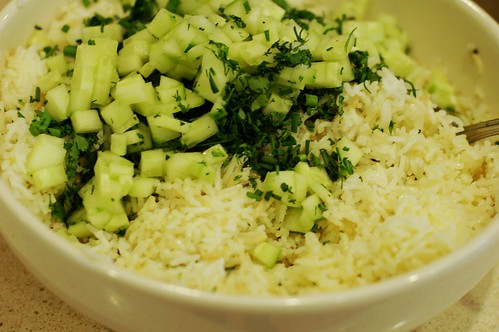
Toss it all together with some olive oil, salt and pepper and you're ready to eat. This salad goes really nicely with grilled veggies, meat or fish.
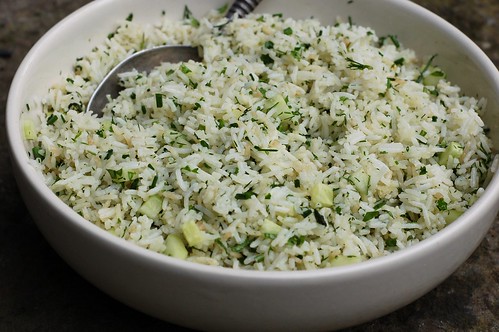
Herbed Rice & Cucumber Salad
Serves 4-6 as a side
Ingredients
* 1 1/2 cups rice
* 1/2 fresh cucumber, washed, peeled and cut into a medium sized dice
* A big handful of fresh herbs of your choice - cilantro, parsley, dill, etc., washed, dried and coarsely chopped
* 2-3 fresh scallions or wild garlic, cleaned and chopped
* 2 Tbsps olive oil
* Sea salt and freshly ground pepper to taste
Directions
1. Wash and drain the rice and cook according to the directions on the package or for whatever kind you wish to use.
2. While the rice is cooking, prep the herbs, cucumber and scallions or wild garlic.
3. When the rice is finished, add one Tbsp of olive oil, fluff it with a fork, dump it out into whatever bowl you plan to serve the salad in and let it cool off a bit.
4. Once the rice has cooled, add the herbs, cucumber, scallions or wild garlic, final Tbsp of olive oil and season with sea salt and black pepper to taste. Toss it gently to ensure that everything gets evenly distributed and serve.
You might also like:
Want even more recipes, photos, giveaways, and food-related inspiration? "Like" the Garden of Eating on Facebook, or follow me on Twitter or Pinterest.
Eat Your Weeds - Wild Garlic a.k.a. Onion Grass or Field Garlic
Sunday, May 4, 2014
Spring has (sort of) arrived here in the Northeast and despite the somewhat chilly temps, there are signs of life returning. A pair of robins is building a nest on top of the light outside our kitchen window. They're all business, darting and swooping as they carry building material - mostly muddy straw from our garden beds - back to weave it all together. The wild ramps we transplanted last summer have mostly come up (hurray!) Daffodils and forsythias have colored large swathes of the landscape yellow and the green is slowly beginning to creep in. And the wild garlic is up!
If you're not already familiar with wild garlic, you shouldn't have any trouble finding it. Just look for tall patches of green that make the grass around it look lazy in comparison. As it gets bigger, it sometimes does some crazy curling, too.
If you're not sure if you've got the right plant, break off a blade/leaf and give it a sniff. If it smells like garlic or onion, you're in business. If it does not smell "stinky", drop it -- there are a number of look-alike plants, some of which are toxic. But you can trust anything that smells like garlic or onion (wild garlic and wild onion look very similar.)
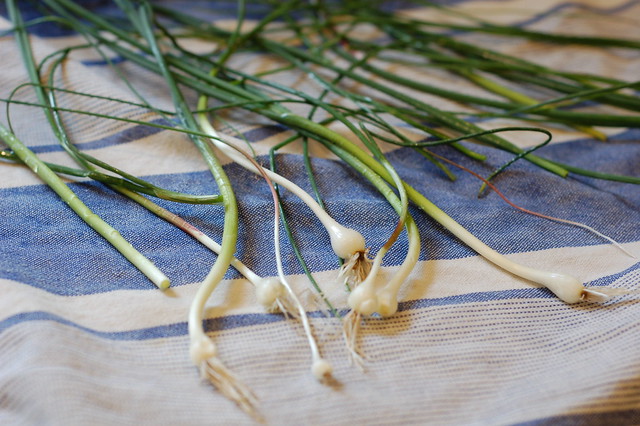
The entire plant is edible from the leaves to the bulb. You can use the greens just like you would use fresh chives. Just snip them off with some scissors, wash them well in a few changes of water to get off dirt, sand and bugs, and chop them up however you like.
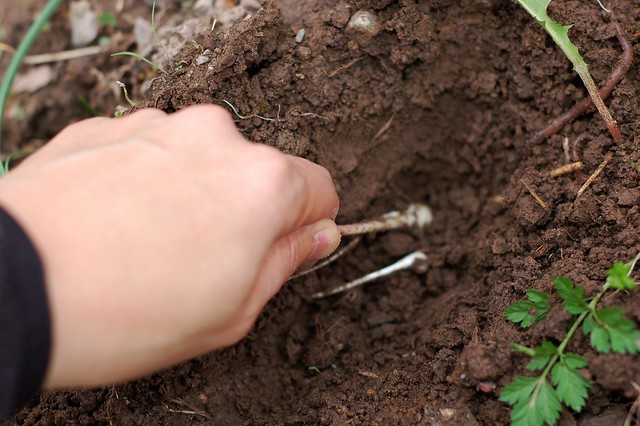
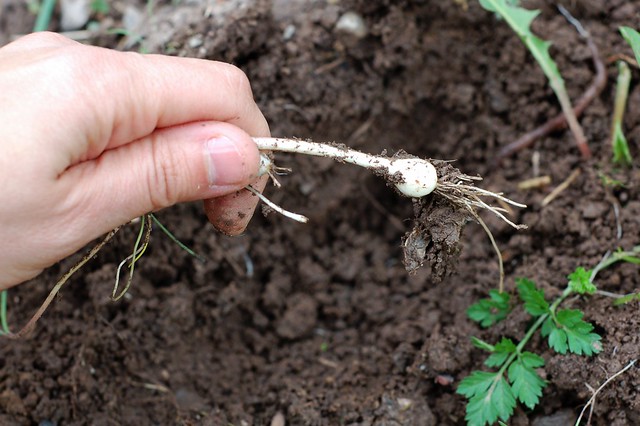
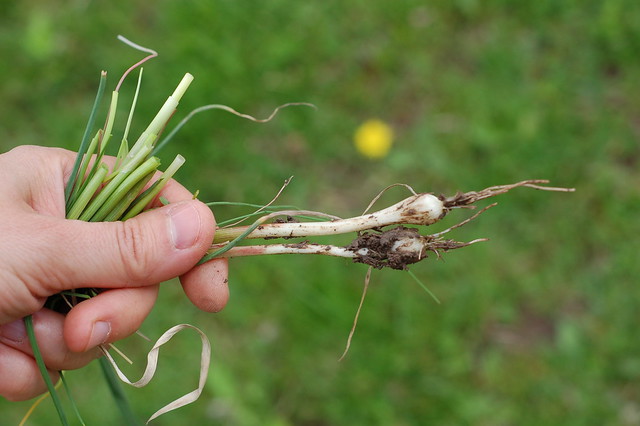
Or you can dig up the whole plant and spend a bit more time cleaning it to make use of the bulb, too. It's similar to a very small shallot. Just a note that our soil is fairly clay-heavy so the bulbs shown here are pretty small - if your dirt is more friable, yours may be bigger!
Sidenote: harvesting wild garlic is a great way to keep kids entertained outdoors and teach them about foraging. I did this with my almost-5-year-old the other day - he got really into it and I got twenty minutes to myself and a whole bunch of wild garlic for the soy-ginger marinade I was making.
What's not to love? It's free, uber local, utterly sustainable (these are considered weeds...), delicious and good for you.
Wild garlic is wonderful in this flavorful, refreshing cucumber rice salad and I also recommend chopping some up and adding them to your next vinaigrette, with or without some fresh herbs.
Or try tossing them with a little olive oil and salt and giving them a quick grill - we did this the other night and had to fight our older son for them!
You could also substitute them in pretty much any recipe that calls for ramps, shallots, scallions or chives with lovely results.
You might also like:
BPA-Free Plastic Is Just as Toxic & A Non-Toxic Water Bottle Giveaway
Monday, March 10, 2014
I've been waiting for the other shoe to drop ever since I first learned about the dangers of BPA (bisphenol A) a few years back. So when I saw this eye-opening Mother Jones article, The Scary New Evidence on BPA-Free Plastics pop up in my Facebook feed a couple of days ago, I could practically hear the thud of footwear falling from the sky...
It turns out that many BPA-free plastics are just as bad for us as the BPA-laden kind, and possibly worse, in some cases. The endocrine disruptors in most plastics have far-ranging effects that not only make us sick, infertile and genetically wacky but they also mess up our children (assuming you overcome the infertility problems) and our children's children and our children's children's children and, well, you get the idea, right?
Perhaps even more disturbing, companies are not required to determine their level of toxicity before releasing them for sale and marketing them as "safe and non-toxic."
After reading, my guilty, panicked thought was, "Now I MUST get rid of the last few plastic sippy cups we have." We got rid of our Nalgene's back in 2008 when the news broke about BPA's badness. And we ditched all our plastic baby bottles a few years ago in favor of Born Free's sturdy, glass bottles with silicone (which is among the least toxic plastics) nipples. And we've got some stainless steel sippy cups in the mix, too. But we'd never quite managed to rid our house of all of the BPA-free plastic sippy cups.
So I turned to MightyNest - the wonderful company I partnered with on my last non-toxic giveaway three years ago. They've got a great selection of glass and stainless steel water bottles and sippy cups for sale. I ordered a few new cups to take the place of the poisonous plastic ones we've still been using against my better judgment. Then I emailed them to see if they'd be open to doing another giveaway to help people ditch their poisonous plastics, too. They were :)
So read on to find out how you can win $100 worth of safe, non-toxic water bottles and food storage containers PLUS $100 for your school. MightyNest's unique program for schools supports the school of your choice when you buy any of their high quality, eco-friendly, non-toxic products – by donating 15% of your purchase price to your local school.
Take the pledge to stop using plastic water bottles and you'll be automatically entered to win a $100 MightyNest gift certificate. The deadline to enter is March 19th. Even if you don't end up winning this delightful giveaway, I hope you'll pitch your plastic now. You won't regret it.
It turns out that many BPA-free plastics are just as bad for us as the BPA-laden kind, and possibly worse, in some cases. The endocrine disruptors in most plastics have far-ranging effects that not only make us sick, infertile and genetically wacky but they also mess up our children (assuming you overcome the infertility problems) and our children's children and our children's children's children and, well, you get the idea, right?
Perhaps even more disturbing, companies are not required to determine their level of toxicity before releasing them for sale and marketing them as "safe and non-toxic."
After reading, my guilty, panicked thought was, "Now I MUST get rid of the last few plastic sippy cups we have." We got rid of our Nalgene's back in 2008 when the news broke about BPA's badness. And we ditched all our plastic baby bottles a few years ago in favor of Born Free's sturdy, glass bottles with silicone (which is among the least toxic plastics) nipples. And we've got some stainless steel sippy cups in the mix, too. But we'd never quite managed to rid our house of all of the BPA-free plastic sippy cups.
So I turned to MightyNest - the wonderful company I partnered with on my last non-toxic giveaway three years ago. They've got a great selection of glass and stainless steel water bottles and sippy cups for sale. I ordered a few new cups to take the place of the poisonous plastic ones we've still been using against my better judgment. Then I emailed them to see if they'd be open to doing another giveaway to help people ditch their poisonous plastics, too. They were :)
So read on to find out how you can win $100 worth of safe, non-toxic water bottles and food storage containers PLUS $100 for your school. MightyNest's unique program for schools supports the school of your choice when you buy any of their high quality, eco-friendly, non-toxic products – by donating 15% of your purchase price to your local school.
Take the pledge to stop using plastic water bottles and you'll be automatically entered to win a $100 MightyNest gift certificate. The deadline to enter is March 19th. Even if you don't end up winning this delightful giveaway, I hope you'll pitch your plastic now. You won't regret it.
Thursday, May 15, 2014
Herbed Rice & Cucumber Salad With Wild Garlic
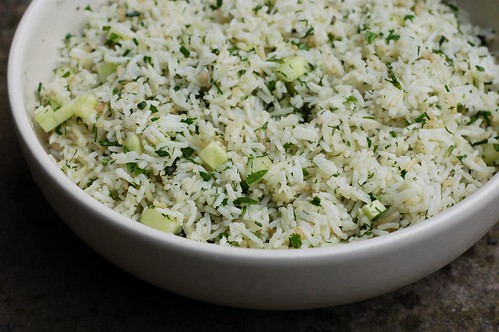
Sometimes I want my rice to be a little more interesting and nutritious. So I make this simple, refreshing salad.
As with almost all of my favorite recipes, it's flexible - you can choose different herbs, leave the scallions or wild garlic out, add more of it, whatever you feel like.
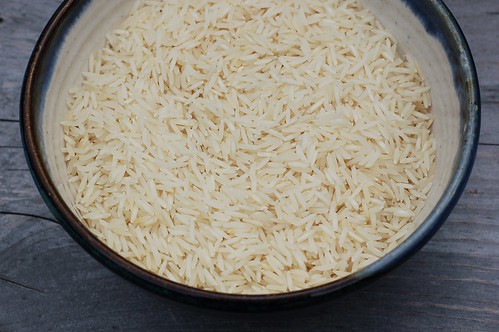
Start by cooking the rice. I used an organic basmati from Thailand as it's apparently got some of the lowest arsenic levels around but you can use any rice you like. Unfortunately, brown rice, which is far more nutritious than white rice, tends to have higher arsenic levels. Damned if you do, damned if you don't. Sigh.
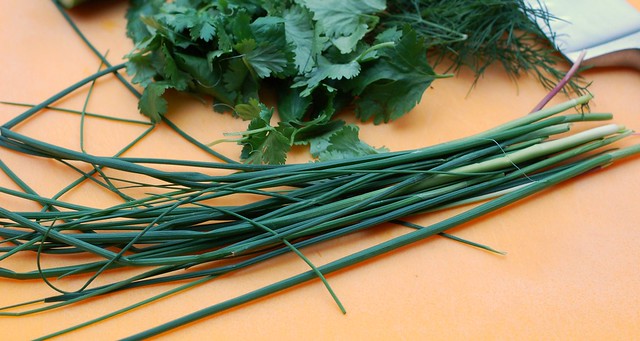
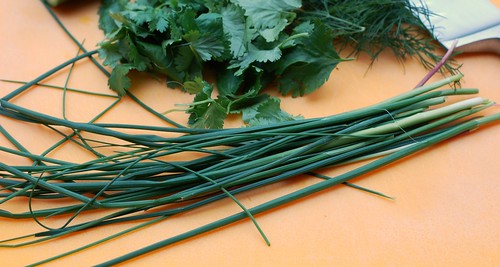
Then wash, dry and chop the herbs of your choice. For this batch, I used a mix of cilantro, dill and wild garlic I'd just harvested from our yard.
Chop up half a large cucumber. I usually peel mine unless it's coming from the garden in which case, I leave the skin on.
Toss it all together with some olive oil, salt and pepper and you're ready to eat. This salad goes really nicely with grilled veggies, meat or fish.
Herbed Rice & Cucumber Salad
Serves 4-6 as a side
Ingredients
* 1 1/2 cups rice
* 1/2 fresh cucumber, washed, peeled and cut into a medium sized dice
* A big handful of fresh herbs of your choice - cilantro, parsley, dill, etc., washed, dried and coarsely chopped
* 2-3 fresh scallions or wild garlic, cleaned and chopped
* 2 Tbsps olive oil
* Sea salt and freshly ground pepper to taste
Directions
1. Wash and drain the rice and cook according to the directions on the package or for whatever kind you wish to use.
2. While the rice is cooking, prep the herbs, cucumber and scallions or wild garlic.
3. When the rice is finished, add one Tbsp of olive oil, fluff it with a fork, dump it out into whatever bowl you plan to serve the salad in and let it cool off a bit.
4. Once the rice has cooled, add the herbs, cucumber, scallions or wild garlic, final Tbsp of olive oil and season with sea salt and black pepper to taste. Toss it gently to ensure that everything gets evenly distributed and serve.
You might also like:
Want even more recipes, photos, giveaways, and food-related inspiration? "Like" the Garden of Eating on Facebook, or follow me on Twitter or Pinterest.
As with almost all of my favorite recipes, it's flexible - you can choose different herbs, leave the scallions or wild garlic out, add more of it, whatever you feel like.
Start by cooking the rice. I used an organic basmati from Thailand as it's apparently got some of the lowest arsenic levels around but you can use any rice you like. Unfortunately, brown rice, which is far more nutritious than white rice, tends to have higher arsenic levels. Damned if you do, damned if you don't. Sigh.
Then wash, dry and chop the herbs of your choice. For this batch, I used a mix of cilantro, dill and wild garlic I'd just harvested from our yard.
Chop up half a large cucumber. I usually peel mine unless it's coming from the garden in which case, I leave the skin on.
Toss it all together with some olive oil, salt and pepper and you're ready to eat. This salad goes really nicely with grilled veggies, meat or fish.
Herbed Rice & Cucumber Salad
Serves 4-6 as a side
Ingredients
* 1 1/2 cups rice
* 1/2 fresh cucumber, washed, peeled and cut into a medium sized dice
* A big handful of fresh herbs of your choice - cilantro, parsley, dill, etc., washed, dried and coarsely chopped
* 2-3 fresh scallions or wild garlic, cleaned and chopped
* 2 Tbsps olive oil
* Sea salt and freshly ground pepper to taste
Directions
1. Wash and drain the rice and cook according to the directions on the package or for whatever kind you wish to use.
2. While the rice is cooking, prep the herbs, cucumber and scallions or wild garlic.
3. When the rice is finished, add one Tbsp of olive oil, fluff it with a fork, dump it out into whatever bowl you plan to serve the salad in and let it cool off a bit.
4. Once the rice has cooled, add the herbs, cucumber, scallions or wild garlic, final Tbsp of olive oil and season with sea salt and black pepper to taste. Toss it gently to ensure that everything gets evenly distributed and serve.
You might also like:
Want even more recipes, photos, giveaways, and food-related inspiration? "Like" the Garden of Eating on Facebook, or follow me on Twitter or Pinterest.
Sunday, May 4, 2014
Eat Your Weeds - Wild Garlic a.k.a. Onion Grass or Field Garlic
Spring has (sort of) arrived here in the Northeast and despite the somewhat chilly temps, there are signs of life returning. A pair of robins is building a nest on top of the light outside our kitchen window. They're all business, darting and swooping as they carry building material - mostly muddy straw from our garden beds - back to weave it all together. The wild ramps we transplanted last summer have mostly come up (hurray!) Daffodils and forsythias have colored large swathes of the landscape yellow and the green is slowly beginning to creep in. And the wild garlic is up!
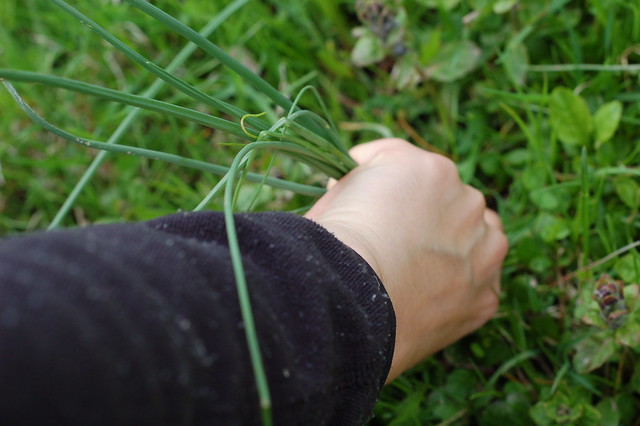
If you're not already familiar with wild garlic, you shouldn't have any trouble finding it. Just look for tall patches of green that make the grass around it look lazy in comparison. As it gets bigger, it sometimes does some crazy curling, too.
If you're not sure if you've got the right plant, break off a blade/leaf and give it a sniff. If it smells like garlic or onion, you're in business. If it does not smell "stinky", drop it -- there are a number of look-alike plants, some of which are toxic. But you can trust anything that smells like garlic or onion (wild garlic and wild onion look very similar.)
The entire plant is edible from the leaves to the bulb. You can use the greens just like you would use fresh chives. Just snip them off with some scissors, wash them well in a few changes of water to get off dirt, sand and bugs, and chop them up however you like.
Or you can dig up the whole plant and spend a bit more time cleaning it to make use of the bulb, too. It's similar to a very small shallot. Just a note that our soil is fairly clay-heavy so the bulbs shown here are pretty small - if your dirt is more friable, yours may be bigger!
Sidenote: harvesting wild garlic is a great way to keep kids entertained outdoors and teach them about foraging. I did this with my almost-5-year-old the other day - he got really into it and I got twenty minutes to myself and a whole bunch of wild garlic for the soy-ginger marinade I was making.
What's not to love? It's free, uber local, utterly sustainable (these are considered weeds...), delicious and good for you.
Wild garlic is wonderful in this flavorful, refreshing cucumber rice salad and I also recommend chopping some up and adding them to your next vinaigrette, with or without some fresh herbs.
Or try tossing them with a little olive oil and salt and giving them a quick grill - we did this the other night and had to fight our older son for them!
You could also substitute them in pretty much any recipe that calls for ramps, shallots, scallions or chives with lovely results.
You might also like:
Monday, March 10, 2014
BPA-Free Plastic Is Just as Toxic & A Non-Toxic Water Bottle Giveaway
I've been waiting for the other shoe to drop ever since I first learned about the dangers of BPA (bisphenol A) a few years back. So when I saw this eye-opening Mother Jones article, The Scary New Evidence on BPA-Free Plastics pop up in my Facebook feed a couple of days ago, I could practically hear the thud of footwear falling from the sky...
It turns out that many BPA-free plastics are just as bad for us as the BPA-laden kind, and possibly worse, in some cases. The endocrine disruptors in most plastics have far-ranging effects that not only make us sick, infertile and genetically wacky but they also mess up our children (assuming you overcome the infertility problems) and our children's children and our children's children's children and, well, you get the idea, right?
Perhaps even more disturbing, companies are not required to determine their level of toxicity before releasing them for sale and marketing them as "safe and non-toxic."
After reading, my guilty, panicked thought was, "Now I MUST get rid of the last few plastic sippy cups we have." We got rid of our Nalgene's back in 2008 when the news broke about BPA's badness. And we ditched all our plastic baby bottles a few years ago in favor of Born Free's sturdy, glass bottles with silicone (which is among the least toxic plastics) nipples. And we've got some stainless steel sippy cups in the mix, too. But we'd never quite managed to rid our house of all of the BPA-free plastic sippy cups.
So I turned to MightyNest - the wonderful company I partnered with on my last non-toxic giveaway three years ago. They've got a great selection of glass and stainless steel water bottles and sippy cups for sale. I ordered a few new cups to take the place of the poisonous plastic ones we've still been using against my better judgment. Then I emailed them to see if they'd be open to doing another giveaway to help people ditch their poisonous plastics, too. They were :)
So read on to find out how you can win $100 worth of safe, non-toxic water bottles and food storage containers PLUS $100 for your school. MightyNest's unique program for schools supports the school of your choice when you buy any of their high quality, eco-friendly, non-toxic products – by donating 15% of your purchase price to your local school.
Take the pledge to stop using plastic water bottles and you'll be automatically entered to win a $100 MightyNest gift certificate. The deadline to enter is March 19th. Even if you don't end up winning this delightful giveaway, I hope you'll pitch your plastic now. You won't regret it.
It turns out that many BPA-free plastics are just as bad for us as the BPA-laden kind, and possibly worse, in some cases. The endocrine disruptors in most plastics have far-ranging effects that not only make us sick, infertile and genetically wacky but they also mess up our children (assuming you overcome the infertility problems) and our children's children and our children's children's children and, well, you get the idea, right?
Perhaps even more disturbing, companies are not required to determine their level of toxicity before releasing them for sale and marketing them as "safe and non-toxic."
After reading, my guilty, panicked thought was, "Now I MUST get rid of the last few plastic sippy cups we have." We got rid of our Nalgene's back in 2008 when the news broke about BPA's badness. And we ditched all our plastic baby bottles a few years ago in favor of Born Free's sturdy, glass bottles with silicone (which is among the least toxic plastics) nipples. And we've got some stainless steel sippy cups in the mix, too. But we'd never quite managed to rid our house of all of the BPA-free plastic sippy cups.
So I turned to MightyNest - the wonderful company I partnered with on my last non-toxic giveaway three years ago. They've got a great selection of glass and stainless steel water bottles and sippy cups for sale. I ordered a few new cups to take the place of the poisonous plastic ones we've still been using against my better judgment. Then I emailed them to see if they'd be open to doing another giveaway to help people ditch their poisonous plastics, too. They were :)
So read on to find out how you can win $100 worth of safe, non-toxic water bottles and food storage containers PLUS $100 for your school. MightyNest's unique program for schools supports the school of your choice when you buy any of their high quality, eco-friendly, non-toxic products – by donating 15% of your purchase price to your local school.
Take the pledge to stop using plastic water bottles and you'll be automatically entered to win a $100 MightyNest gift certificate. The deadline to enter is March 19th. Even if you don't end up winning this delightful giveaway, I hope you'll pitch your plastic now. You won't regret it.