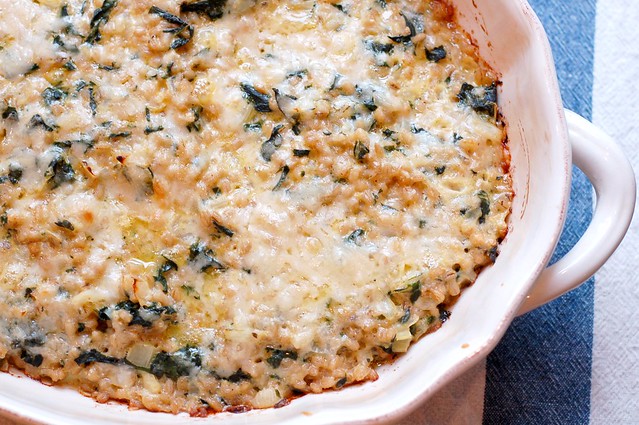
Swiss Chard & Barley Gratin

Tuesday, May 17, 2011

Swiss Chard & Barley Gratin by Eve Fox, Garden of Eating blog, copyright 2011

After a few, all-too-brief days of glorious blue skies, sunshine and warm breezes, it has been raining for the past five days straight. And, if we are to believe the weather forecast (even though that's often a foolish thing to do), we're in for more of the same for the foreseeable future. Blech.

Unfortunately, I am not blessed with the "sunniest" of dispositions and when it is gray out for days on end (or, to be honest, even just a few hours), I begin to feel tired, cranky and a tad despairing. One way I've found to beat the rainy day week blues is to cook something really delicious and cozy. So when Sunday dawned just as gray, wet and depressing as the previous few days had been, I decided to try out a variation on this delicious, hearty barley and greens gratin that I'd spotted in the New York Times' Recipes for Health column earlier in the week.

Eggs Hiding In The Cream by Eve Fox, Garden of Eating blog, copyright 2011

As usual, I took Martha Rose Schulman's excellent, health-conscious recipe and made it a little less healthy by substituting cream for her 2% milk (though I think my version is still pretty good for you.)
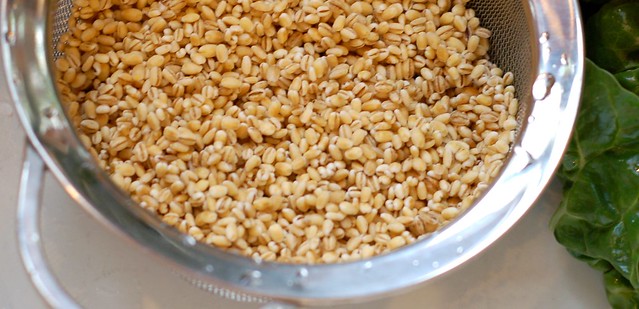
I was primarily drawn to this recipe by the barley - it sounds so filling and unpretentious. I can imagine a big, bustling family of French peasants devouring this dish with gusto after hours in the fields, n'est-ce pas?

Rinsing the Barley by Eve Fox, Garden of Eating blog, copyright 2011

I was also glad to have a chance to use some of our fresh thyme. I finally moved our plant outside last week after a long winter indoors and it seems to like this endless rain. At least one of us is happy...

Our Thyme Plant by Eve Fox, Garden of Eating blog, copyright 2011

I substituted Swiss Chard for the beet greens since I did not feel like dealing with beets and also found the thought of chard's brilliant greenery appealing.

Swiss Chard by Eve Fox, Garden of Eating blog, copyright 2011

I served this for lunch along with a green salad topped with roasted beets, a nice crumbly sheep's milk feta cheese, and sliced cucumbers. It did the trick. I am REALLY hoping that the sun comes out soon, though!

Swiss Chard & Barley Gratin by Eve Fox, Garden of Eating blog, copyright 2011

-- print recipe --
Swiss Chard & Barley Gratin
Serves 4-6

Ingredients

* 1 generous bunch Swiss chard (or beet greens or spinach or kale), washed and dried with the ribs removed (chop the ribs and set them aside)
* 2 tablespoons extra virgin olive oil
* 1 large onion, chopped
* 4 large cloves garlic, peeled and sliced or pressed
* Salt to taste
* 1 teaspoon fresh thyme leaves or 1/2 teaspoon dried thyme
* 3 eggs (use organic, free range)
* 1/2 cup half and half or whole milk (use organic, grass-fed, if you can get it)
* 2 Tbsp Worcestershire sauce
* 1 tsp Dijon mustard
* Freshly ground pepper
* 1 cup cooked barley (regular pearled or purple), brown rice or arborio rice
* 1/2 cup grated Gruyère cheese (2 ounces)
* 2 tablespoons freshly grated Parmesan

Directions

1. Preheat the oven to 375 degrees. Grease a 2-quart gratin dish with butter or olive oil. Steam the chard leaves or other greens over 1 inch of boiling water for two to five minutes until wilted and tender. Rinse with cold water, squeeze out water and chop medium-fine. Set aside.

2. Heat the oil over medium heat in a large, heavy skillet. Add the onion and cook, stirring, until tender, about five minutes. Add the garlic, the chopped chard ribs and a generous pinch of salt. Continue to cook for another minute or two until the garlic is fragrant. Stir in the cooked greens and the thyme, and toss together. Season to taste with salt and pepper. Remove from the heat.

3. In a large bowl, beat together the eggs and milk. Add the mustard, Worcestershire sauce, 1/2 teaspoon salt and freshly ground pepper to taste. Stir in the greens mixture, the barley or rice, and the cheeses. Mix together well. Scrape into the oiled baking dish.

4. Bake 35 to 40 minutes until sizzling and lightly browned on the top and sides. Remove from the heat, and allow to sit for at least 10 minutes before serving.

You might also like:
For more delicious recipes, gardening ideas, foraging tips, and food-related inspiration "like" the Garden of Eating on Facebook, or follow me on Twitter and Pinterest.

Lemon Aioli, Roasted Beets, Asparagus & Oven Fries - An Homage To Spring

Sunday, May 15, 2011

The first time I tried to make aioli (a.k.a. garlic mayonnaise), a couple of years ago, the mixture never thickened. I was left with a big, messy bowl of soupy, garlic-flavored egg yolk and oil and a heavy feeling of failure. But that earlier defeat only heightened my sense of triumph at creating a truly delicious, perfectly balanced, lemon aioli last weekend!

Roasted beets & asparagus with lemon aioli by Eve Fox, Garden of Eating blog, copyright 2011

I had always suspected that my first attempt failed because I had not drizzled the oil in slowly enough to allow for the emulsion to form properly so this time I made sure to pour the oil into the food processor in a tiny, steady stream. Et voilà, a mere three minutes later -- a lovely bowl of golden deliciousness.

I had planned to roast some beets and potatoes to dip in this dangerously addictive sauce and decided at the last minute to steam some asparagus, too, since the local offerings have been so tasty these last few weeks - my little way of tipping my hat to spring.

Perfect oven fries by Eve Fox, Garden of Eating blog, copyright 2011

The combination of the sweet, earthy beets, crispy, salty potatoes and the fresh umami (which is Japanese for "pleasant savory taste") of the asparagus with the lemon aioli is, well, awesome.

Roasted beets & asparagus with lemon aioli by Eve Fox, Garden of Eating blog, copyright 2011

While none of these components is particularly time-consuming or challenging to assemble, there is a fair amount of slicing and dicing involved, as well as some roasting time. But you could easily just do one or two of the veggies with the aioli if you're in a rush.

Happy spring!

-- print recipe --
Lemon Aioli With Roasted Beets, Perfect Oven Fries & Steamed Asparagus
Serves 4-6

Ingredients
  • 2-3 large beets, scrubbed, tops and tails removed
  • 3 large or 4 medium potatoes, preferably russets, scrubbed
  • 1 bunch asparagus, washed and with woody ends snapped off
For the aioli:
  • 1 lemon (preferably, organic, since you'll be using the zest- also, if you have a Meyer lemon on hand, use that, it will be delicious!)
  • 1 tsp Dijon mustard
  • 1 cup good quality olive oil (use organic)
  • 2 large egg yolks (use organic, free range eggs)
  • 2 large garlic cloves, peeled and cut into rough chunks
  • Sea salt to taste (you'll probably want to use around 1/2 tsp)
  • Freshly ground white or black pepper to taste
Directions

1.  Begin by roasting the beets. Preheat the oven to 450°F. Place the scrubbed, trimmed beets in a generous pouch of tinfoil, drizzle them with olive oil and fold the foil over them to form a neat, enclosed little package. Place the package on a baking sheet (preferably one you do not care overmuch about as it may end up getting some charred beet juice baked on to it -- another reason not to skimp with the tinfoil - I actually used two layers this time around), place it on the rack and bake for 40-60 minutes, until the beets are tender when poked with a fork. When they're done, remove them from the oven and allow them to cool, then slip the skins off with your fingers or a knife and slice them into rounds (or whatever shape appeals to you.)

Scrubbing the beets before roasting by Eve Fox, Garden of Eating blog, copyright 2011

2. Once the beets are in the oven, it's time to turn your attention to the oven fries. Follow this recipe - it's from Cook's Illustrated and it never fails to produce the most perfect oven fries you could imagine.

Oven fries roasting by Eve Fox, Garden of Eating blog, copyright 2011

3. Now it's time to make the aioli. Zest the lemon and then juice it, placing both the zest and juice in the bowl of a food processor.

Lemon Zest By Eve Fox, Garden of Eating blog, copyright 2011

Toss the garlic cloves, mustard and egg yolks into the bowl of the food processor and process until smooth. With the motor running, begin to pour in the oil in a steady, thin stream -- resist the temptation to pour it in quickly -- the slow, steady addition is essential to allowing the emulsion to form. Continue to pour until all the oil has been added. You should see the mixture "gel" and become mayo-like during the process. Add white pepper and salt to taste and pulse a few times to incorporate the seasonings. Remove the aioli from the bowl, place it in a glass container with an airtight lid and put it in the fridge while you get the rest of the meal ready.

Roasted beets & asparagus with lemon aioli by Eve Fox, Garden of Eating blog, copyright 2011

* Please note that since aioli contains raw egg so you should not feed it to infants, the elderly or anyone with a compromised immune system due to the risk of salmonella. Also, you should keep it refrigerated and plan to use it up quickly.

4. Place an inch or two of water in the bottom of a steamer pot and bring to a boil. Add the asparagus (heads up) to the pot and steam for 2-3 minutes, just until bright green and slightly tender. While they're steaming, prepare a bowl of ice water that is large enough to hold all the asparagus. Once the asparagus are done, remove them from the steamer and plunge them into the bowl of ice water to stop the cooking. Then drain and gently pat dry with a kitchen towel.

Asparagus Spears Drying by Eve Fox, Garden of Eating blog, copyright 2011

5. Arrange the oven fries, beet slices and asparagus spears on a platter and serve with the lemon aioli.

You might also like:
For more delicious recipes, gardening ideas, foraging tips, and food-related inspiration "like" the Garden of Eating on Facebook, or follow me on Twitter and Pinterest.

Good News - More Farms Are "Hoofin' It"

Wednesday, May 4, 2011

Just saw this short piece in the New York Times about a growing trend among small farms - more and more of them are using animal power in place of tractors and other oil-powered machines.
Rich Ciotola with the team of young oxen he works with in Sheffield, Mass. Photo by Jennifer May, courtesy of The New York Times web site.
It looks like Kristin Kimball, author of The Dirty Life (a great new read - my review is here) and her husband, Mark of Essex Farm are in good company. They use draft horses to work their 100-acre organic farm in New York's northcountry.

Animal power has some distinct advantages to oil-powered machines for small-scale farming:
  • They don't require costly, environment-polluting fossil fuels;
  • They never need spare parts;
  • They are literally lighter on the land than machines are - instead of leaving deep ruts of dense-packed soil behind them, the hooves of horses and oxen actually aerate the soil and do not damage the all-important layers of fertile microbes in the dirt;
  • They also provide free fertilizer!; and
  • They're better company than a tractor.
Demand for instruction on how to train and work with draft animals is soaring as young farmers look to a 7,000-year-old practice to help make their farms as modern as possible.

Draft power is spreading! Read more on the NYTimes.com site.

Tuesday, May 17, 2011

Swiss Chard & Barley Gratin

Swiss Chard & Barley Gratin by Eve Fox, Garden of Eating blog, copyright 2011

After a few, all-too-brief days of glorious blue skies, sunshine and warm breezes, it has been raining for the past five days straight. And, if we are to believe the weather forecast (even though that's often a foolish thing to do), we're in for more of the same for the foreseeable future. Blech.

Unfortunately, I am not blessed with the "sunniest" of dispositions and when it is gray out for days on end (or, to be honest, even just a few hours), I begin to feel tired, cranky and a tad despairing. One way I've found to beat the rainy day week blues is to cook something really delicious and cozy. So when Sunday dawned just as gray, wet and depressing as the previous few days had been, I decided to try out a variation on this delicious, hearty barley and greens gratin that I'd spotted in the New York Times' Recipes for Health column earlier in the week.

Eggs Hiding In The Cream by Eve Fox, Garden of Eating blog, copyright 2011

As usual, I took Martha Rose Schulman's excellent, health-conscious recipe and made it a little less healthy by substituting cream for her 2% milk (though I think my version is still pretty good for you.)

I was primarily drawn to this recipe by the barley - it sounds so filling and unpretentious. I can imagine a big, bustling family of French peasants devouring this dish with gusto after hours in the fields, n'est-ce pas?

Rinsing the Barley by Eve Fox, Garden of Eating blog, copyright 2011

I was also glad to have a chance to use some of our fresh thyme. I finally moved our plant outside last week after a long winter indoors and it seems to like this endless rain. At least one of us is happy...

Our Thyme Plant by Eve Fox, Garden of Eating blog, copyright 2011

I substituted Swiss Chard for the beet greens since I did not feel like dealing with beets and also found the thought of chard's brilliant greenery appealing.

Swiss Chard by Eve Fox, Garden of Eating blog, copyright 2011

I served this for lunch along with a green salad topped with roasted beets, a nice crumbly sheep's milk feta cheese, and sliced cucumbers. It did the trick. I am REALLY hoping that the sun comes out soon, though!

Swiss Chard & Barley Gratin by Eve Fox, Garden of Eating blog, copyright 2011

-- print recipe --
Swiss Chard & Barley Gratin
Serves 4-6

Ingredients

* 1 generous bunch Swiss chard (or beet greens or spinach or kale), washed and dried with the ribs removed (chop the ribs and set them aside)
* 2 tablespoons extra virgin olive oil
* 1 large onion, chopped
* 4 large cloves garlic, peeled and sliced or pressed
* Salt to taste
* 1 teaspoon fresh thyme leaves or 1/2 teaspoon dried thyme
* 3 eggs (use organic, free range)
* 1/2 cup half and half or whole milk (use organic, grass-fed, if you can get it)
* 2 Tbsp Worcestershire sauce
* 1 tsp Dijon mustard
* Freshly ground pepper
* 1 cup cooked barley (regular pearled or purple), brown rice or arborio rice
* 1/2 cup grated Gruyère cheese (2 ounces)
* 2 tablespoons freshly grated Parmesan

Directions

1. Preheat the oven to 375 degrees. Grease a 2-quart gratin dish with butter or olive oil. Steam the chard leaves or other greens over 1 inch of boiling water for two to five minutes until wilted and tender. Rinse with cold water, squeeze out water and chop medium-fine. Set aside.

2. Heat the oil over medium heat in a large, heavy skillet. Add the onion and cook, stirring, until tender, about five minutes. Add the garlic, the chopped chard ribs and a generous pinch of salt. Continue to cook for another minute or two until the garlic is fragrant. Stir in the cooked greens and the thyme, and toss together. Season to taste with salt and pepper. Remove from the heat.

3. In a large bowl, beat together the eggs and milk. Add the mustard, Worcestershire sauce, 1/2 teaspoon salt and freshly ground pepper to taste. Stir in the greens mixture, the barley or rice, and the cheeses. Mix together well. Scrape into the oiled baking dish.

4. Bake 35 to 40 minutes until sizzling and lightly browned on the top and sides. Remove from the heat, and allow to sit for at least 10 minutes before serving.

You might also like:
For more delicious recipes, gardening ideas, foraging tips, and food-related inspiration "like" the Garden of Eating on Facebook, or follow me on Twitter and Pinterest.

Sunday, May 15, 2011

Lemon Aioli, Roasted Beets, Asparagus & Oven Fries - An Homage To Spring

The first time I tried to make aioli (a.k.a. garlic mayonnaise), a couple of years ago, the mixture never thickened. I was left with a big, messy bowl of soupy, garlic-flavored egg yolk and oil and a heavy feeling of failure. But that earlier defeat only heightened my sense of triumph at creating a truly delicious, perfectly balanced, lemon aioli last weekend!

Roasted beets & asparagus with lemon aioli by Eve Fox, Garden of Eating blog, copyright 2011

I had always suspected that my first attempt failed because I had not drizzled the oil in slowly enough to allow for the emulsion to form properly so this time I made sure to pour the oil into the food processor in a tiny, steady stream. Et voilà, a mere three minutes later -- a lovely bowl of golden deliciousness.

I had planned to roast some beets and potatoes to dip in this dangerously addictive sauce and decided at the last minute to steam some asparagus, too, since the local offerings have been so tasty these last few weeks - my little way of tipping my hat to spring.

Perfect oven fries by Eve Fox, Garden of Eating blog, copyright 2011

The combination of the sweet, earthy beets, crispy, salty potatoes and the fresh umami (which is Japanese for "pleasant savory taste") of the asparagus with the lemon aioli is, well, awesome.

Roasted beets & asparagus with lemon aioli by Eve Fox, Garden of Eating blog, copyright 2011

While none of these components is particularly time-consuming or challenging to assemble, there is a fair amount of slicing and dicing involved, as well as some roasting time. But you could easily just do one or two of the veggies with the aioli if you're in a rush.

Happy spring!

-- print recipe --
Lemon Aioli With Roasted Beets, Perfect Oven Fries & Steamed Asparagus
Serves 4-6

Ingredients
  • 2-3 large beets, scrubbed, tops and tails removed
  • 3 large or 4 medium potatoes, preferably russets, scrubbed
  • 1 bunch asparagus, washed and with woody ends snapped off
For the aioli:
  • 1 lemon (preferably, organic, since you'll be using the zest- also, if you have a Meyer lemon on hand, use that, it will be delicious!)
  • 1 tsp Dijon mustard
  • 1 cup good quality olive oil (use organic)
  • 2 large egg yolks (use organic, free range eggs)
  • 2 large garlic cloves, peeled and cut into rough chunks
  • Sea salt to taste (you'll probably want to use around 1/2 tsp)
  • Freshly ground white or black pepper to taste
Directions

1.  Begin by roasting the beets. Preheat the oven to 450°F. Place the scrubbed, trimmed beets in a generous pouch of tinfoil, drizzle them with olive oil and fold the foil over them to form a neat, enclosed little package. Place the package on a baking sheet (preferably one you do not care overmuch about as it may end up getting some charred beet juice baked on to it -- another reason not to skimp with the tinfoil - I actually used two layers this time around), place it on the rack and bake for 40-60 minutes, until the beets are tender when poked with a fork. When they're done, remove them from the oven and allow them to cool, then slip the skins off with your fingers or a knife and slice them into rounds (or whatever shape appeals to you.)

Scrubbing the beets before roasting by Eve Fox, Garden of Eating blog, copyright 2011

2. Once the beets are in the oven, it's time to turn your attention to the oven fries. Follow this recipe - it's from Cook's Illustrated and it never fails to produce the most perfect oven fries you could imagine.

Oven fries roasting by Eve Fox, Garden of Eating blog, copyright 2011

3. Now it's time to make the aioli. Zest the lemon and then juice it, placing both the zest and juice in the bowl of a food processor.

Lemon Zest By Eve Fox, Garden of Eating blog, copyright 2011

Toss the garlic cloves, mustard and egg yolks into the bowl of the food processor and process until smooth. With the motor running, begin to pour in the oil in a steady, thin stream -- resist the temptation to pour it in quickly -- the slow, steady addition is essential to allowing the emulsion to form. Continue to pour until all the oil has been added. You should see the mixture "gel" and become mayo-like during the process. Add white pepper and salt to taste and pulse a few times to incorporate the seasonings. Remove the aioli from the bowl, place it in a glass container with an airtight lid and put it in the fridge while you get the rest of the meal ready.

Roasted beets & asparagus with lemon aioli by Eve Fox, Garden of Eating blog, copyright 2011

* Please note that since aioli contains raw egg so you should not feed it to infants, the elderly or anyone with a compromised immune system due to the risk of salmonella. Also, you should keep it refrigerated and plan to use it up quickly.

4. Place an inch or two of water in the bottom of a steamer pot and bring to a boil. Add the asparagus (heads up) to the pot and steam for 2-3 minutes, just until bright green and slightly tender. While they're steaming, prepare a bowl of ice water that is large enough to hold all the asparagus. Once the asparagus are done, remove them from the steamer and plunge them into the bowl of ice water to stop the cooking. Then drain and gently pat dry with a kitchen towel.

Asparagus Spears Drying by Eve Fox, Garden of Eating blog, copyright 2011

5. Arrange the oven fries, beet slices and asparagus spears on a platter and serve with the lemon aioli.

You might also like:
For more delicious recipes, gardening ideas, foraging tips, and food-related inspiration "like" the Garden of Eating on Facebook, or follow me on Twitter and Pinterest.

Wednesday, May 4, 2011

Good News - More Farms Are "Hoofin' It"

Just saw this short piece in the New York Times about a growing trend among small farms - more and more of them are using animal power in place of tractors and other oil-powered machines.
Rich Ciotola with the team of young oxen he works with in Sheffield, Mass. Photo by Jennifer May, courtesy of The New York Times web site.
It looks like Kristin Kimball, author of The Dirty Life (a great new read - my review is here) and her husband, Mark of Essex Farm are in good company. They use draft horses to work their 100-acre organic farm in New York's northcountry.

Animal power has some distinct advantages to oil-powered machines for small-scale farming:
  • They don't require costly, environment-polluting fossil fuels;
  • They never need spare parts;
  • They are literally lighter on the land than machines are - instead of leaving deep ruts of dense-packed soil behind them, the hooves of horses and oxen actually aerate the soil and do not damage the all-important layers of fertile microbes in the dirt;
  • They also provide free fertilizer!; and
  • They're better company than a tractor.
Demand for instruction on how to train and work with draft animals is soaring as young farmers look to a 7,000-year-old practice to help make their farms as modern as possible.

Draft power is spreading! Read more on the NYTimes.com site.